





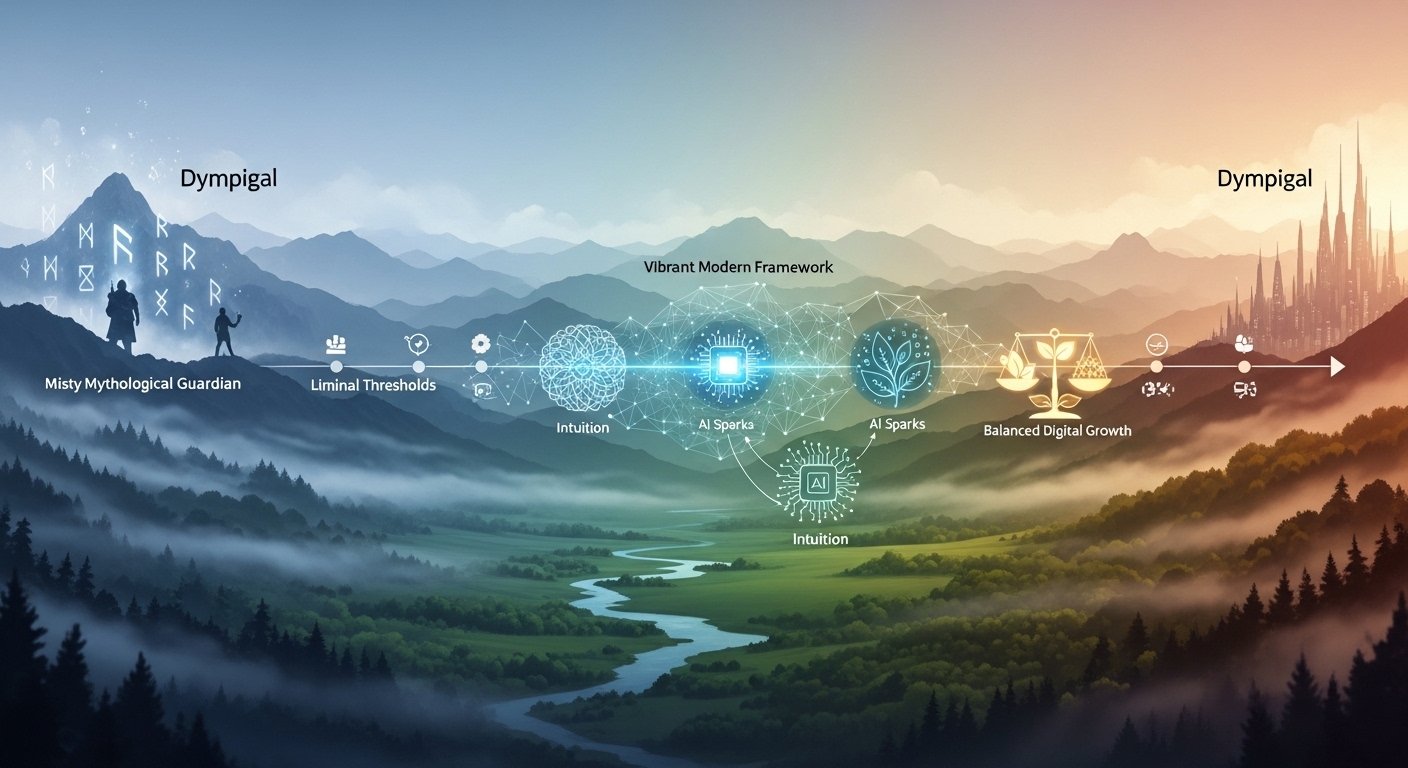
Have you ever paused mid-scroll, sensing that a gut feeling could outperform the smartest algorithm on your screen? That quiet tension between instinct and data captures the heart of the dympigal mindset. In our fast-changing world, this approach helps forward-thinking professionals, creators, and tech enthusiasts blend human intuition with AI tools to stay adaptable and creative. It turns uncertainty into strength instead of stress.
What Is Dympigal and Why Does It Matter?
Dympigal started as a mysterious idea but has grown into a practical guide for modern life. The word combines roots that suggest mist and hidden spark. It points to something veiled yet bright, like potential waiting to emerge. Today it stands for the balance between old wisdom and new technology. You might wonder why this matters now. Simple answer: AI handles patterns and predictions, but only human intuition adds context, emotion, and ethics. Without that mix, we risk cold efficiency or blind guesses. The dympigal mindset fixes that gap. It encourages fluid intelligence, where you shift thinking styles as situations demand. Professionals who adopt it report clearer decisions, stronger digital identities, and more creative output in crowded online spaces.
Think of a content creator building a brand. AI suggests trending topics and audience data. Yet the real magic happens when intuition shapes the voice that feels authentic. That blend creates lasting connection. Early adopters in marketing and startups already use similar hybrid approaches. They achieve better results because they treat AI as a partner, not a replacement.
The Mythical Roots of Dympigal: From Archetype to Digital Reality
Stories of dympigal trace back to folklore about shapeshifting guardians. These beings lived in liminal spaces, the in-between zones where one state ends and another begins. Imagine a figure made of mist and flame, guiding souls across thresholds with quiet wisdom. It revealed secrets only to those who approached with open hearts. Scholars link it to archetypes in psychology, much like Carl Jung described shadow work: facing hidden parts of yourself to reach wholeness. In archetypal psychology, dympigal represents duality and balance. It shows how opposing forces, such as concealment and revelation, work together for growth.
This ancient image translates smoothly to today’s tech world. Digital culture now features similar thresholds, like the blurry line between human creativity and machine generation. When you post online or collaborate with AI, you step into those liminal spaces. The dympigal archetype reminds us to move through them with awareness. It promotes adaptive thinking so you stay grounded amid rapid technological transformation. No longer just myth, it becomes a mindset tool for anyone building a digital identity or leading teams through change.
Core Principles of the Dympigal Mindset
At its center, the dympigal mindset rests on four connected ideas that create hybrid intelligence. First comes AI and data-driven insights. Tools analyze huge datasets, spot patterns, and forecast trends with speed no person can match. Second is human intuition and lived experience. This adds nuance that numbers miss, such as emotional cues or cultural subtleties. Third arrives cultural and historical wisdom. Lessons from the past help avoid repeating mistakes and ensure solutions respect diverse perspectives. Fourth involves technological innovation itself. New platforms and creative tools amplify everything when paired with human-centered choices.
Together these elements produce creative flexibility. You move beyond rigid plans into responsive action. For instance, a small business owner might use AI for inventory predictions yet rely on customer conversations to tweak offerings. The result feels both smart and personal. This framework also supports shadow work in a modern sense. It invites you to examine biases in your data or fears about automation. By integrating those shadows, you gain clearer vision and stronger resilience.
Applying Dympigal to Personal Growth and Daily Life
You can start cultivating the dympigal mindset with small, consistent steps. Begin each day with a quick reflection: what does the data say, and what does my gut add? Journaling works well here. Write one data-backed insight and one intuitive hunch, then note where they align. Over time this builds adaptive thinking muscles.
In creative work, try scenario planning. Picture three possible futures for your project, one driven purely by AI trends, one by pure instinct, and one that merges both. Choose the hybrid path. Many digital creators do exactly this when refining their personal brand. They let algorithms suggest hashtags or visuals but trust their inner sense of authenticity to finalize the story.
Mindfulness practices help too. A short meditation on transitions, such as dawn or dusk, mirrors the liminal energy of dympigal. It trains you to sit comfortably with ambiguity instead of rushing for answers. People who practice this way often describe feeling more creative and less overwhelmed by constant tech updates.
Dympigal in Business and Technological Transformation
Businesses already see big wins when teams adopt this mindset. Consider a retailer that combined AI forecasting with store staff intuition about local tastes. The company cut waste by twenty percent and lifted customer satisfaction by fifteen percent. Another financial firm used data analytics alongside cultural knowledge of client preferences. Retention rates rose and cross-selling improved naturally.
Leaders who embrace dympigal treat AI as an enhancer of human strengths. They train staff on hybrid workflows, encourage feedback loops, and prioritize ethical use. This prevents common pitfalls like over-reliance on algorithms that ignore real-world context. The payoff includes faster innovation, sustainable growth, and stronger teams ready for whatever comes next.
Navigating Liminal Spaces: Challenges and Practical Tips
Change always brings discomfort, especially in those in-between moments where old ways fade and new ones emerge. You might worry that intuition will clash with AI recommendations or that shadow work feels too personal for professional settings. These doubts are normal. The key is gentle integration rather than force. Start small: test one AI suggestion against your own read of the situation, then adjust based on outcomes.
Common mistakes include ignoring cultural wisdom or treating technology as infallible. To avoid them, build diverse input circles. Talk with people from different backgrounds. Review historical parallels before big launches. Also schedule regular reviews where you question assumptions. These habits turn potential chaos into creative flexibility.
3 Key Takeaways and Next Steps
The dympigal mindset offers a clear path forward. First, honor duality by pairing data with intuition every time. Second, lean into liminal spaces as places of growth instead of fear. Third, keep evolving through reflection and small experiments.
Ready to begin? Pick one area of your work or life this week. Apply the hybrid approach and notice what shifts. What’s one small change you’ll try today? Share it in the comments or with a colleague. Small steps compound into future-ready success.
You May Also Like: Revo Technologies Murray Utah: Delivering Innovation and IT Solutions
FAQs
What does dympigal actually mean?
It refers to a mindset and framework that merges veiled brilliance from myth with practical tools for balancing intuition and technology. The term evokes mist and spark, symbolizing hidden potential revealed through wise action.
How does dympigal relate to shadow work?
It encourages facing hidden biases or fears, much like Jungian practices, so you integrate them rather than ignore them. This creates stronger balance when working with AI or navigating change.
Can anyone develop a dympigal mindset?
Yes. Start with daily reflection that combines data review and intuitive journaling. No special background is required, only curiosity and willingness to experiment.
Is dympigal just another buzzword for digital transformation?
Not at all. While it supports tech change, it uniquely stresses human elements like cultural wisdom and ethical intuition, making it more holistic than standard digital strategies.
How does it help with digital identity?
It guides you to craft authentic online presence by letting AI suggest options while your inner voice shapes the final authentic expression that stands out.
What tools or practices support this mindset?
Use AI platforms for analysis, mindfulness apps for intuition tuning, and simple scenario planning exercises. Combine them regularly for best results.
Will the dympigal approach stay relevant as AI advances?
Absolutely. As machines grow more powerful, the need for human-centered guidance only increases. Its focus on adaptability ensures it evolves alongside technology.